
At the recent ASCM CHAINge Conference in Columbus, Ohio, SCMR sat down with Abe Eshkenazi, CEO of the Association for Supply Chain Management (ASCM), for a wide-ranging discussion. From AI to workforce priorities and the shifting role of sustainability, Eshkenazi shared candid thoughts on the challenges—and opportunities—facing supply chains in 2026 and beyond.
AI + human talent: Technology alone isn’t enough
Artificial intelligence has topped ASCM’s Top 10 Trends for 2026, and with good reason. Companies are under pressure to leverage AI for scenario planning, forecasting, and decision-making. But in our interview, Eshkenazi was quick to stress that AI must be paired with human judgment. He gave the example of AI’s role in scenario planning, which has become more complex, but more necessary, in today’s geopolitical environment.
“I don’t want to do scenario planning without AI today because of the mass amount of information and the disparate inputs that you need to account for,” he said. “Allow the technology to do what it does; allow the people to do what they do. Technology is good for mass amounts of information on evaluating and doing the various analysis, but you still need to have individuals who can critically think and can problem-solve and not accept the information that’s coming out of the computer just blindly.”
The goal, he noted, is a “winning combination” where AI handles scale and complexity while people provide reasonableness, ethical oversight, and practical decision-making.
But even as companies become more dependent on AI, people remain the foundation upon which those companies are built. Eshkenazi highlighted the gap between what companies say about their employees and how they actually invest in them.
“If your number one asset is your employees, why are you not investing in your employees as your number one asset?” he asked. “Technology with knowledgeable, capable employees is a winning formula.”
He warned against episodic training programs and urged organizations to see workforce development as continuous. Companies that make this shift, he argued, not only retain talent but also outperform their peers.
“The organizations that are much further ahead do not look at training as episodic,” he said, pointing out that companies that continually invest in talent “not only see higher retention, but higher performance.”
The sustainability metrics crisis
Sustainability still remains on the agenda of many companies, if not publicly, at least from an organizational standpoint. However, Eshkenazi argued that progress is being hampered by a lack of standards, allowing individual companies and countries to set their own bars of success.
“When you’re starting to talk about the efficiency of sustainability, how sustainable are you? It’s the wild west,” he said. “Every company has a different metric in terms of what their sustainable practices are. We’ve seen a lot of green washing, we’re seeing a lot of hush washing right now.”
Without common reporting frameworks, he continued, comparisons are meaningless and accountability is limited. “We do not do well with uncertainty and lack of consistency. If anybody can report out on any metric on sustainability, what’s the value of that metric,” he added.
The generational demand for sustainability
Despite the current uncertainty, Eshkenazi sees sustainability as a powerful long-term driver in younger generations.
“Sustainability is not going away. Consumers are not going to stop caring about where the products come from, who touched it, how did it get there, and what happens to it after they’re done with it,” he said.
He contrasted his generation’s “say-do gap” where sustainability matters but it still buys on price with Gen Z and millennials, who are more likely to purchase consistent with their values.
“They grew up in an environment where they were taught about sustainability and environmental impact,” he said. “They’re breathing it from the moment that they can be conscious about their impact. They’re more likely to spend consistent with their values and their expectations. What’s the difference? They don’t have the pocketbook [right now]. They will have the pocketbook.”
As that shift takes hold, he predicted companies will have no choice but to respond.
“We make what consumers want. If consumers want sustainable, reliable, quality products, we’re going to make sustainable quality, responsible products, and we’re going to do it efficiently and we’re going to be able to make money on it because that’s what the consumer wants.”
Looking ahead
Eshkenazi’s perspective is clear: the future of supply chains hinges on balancing technology with human capability, embedding sustainability into core business models, and preparing for generational shifts in consumer expectations.
“Technology with capable talent—that’s a winning combination,” he said. “And sustainability is not going away.”
As companies plan for 2026 and beyond, those two truths may prove to be the guiding light for organizations and the path to success.
SC
MR

More Supply Chain Management
- Managing human and AI teams across the supply chain
- AI won’t fix a broken supply chain foundation
- Stop moving boxes, start moving dollars: The new math of global supply chain velocity
- Consensus won’t cut it: Why assertive advocate CSCOs deliver sustained cost excellence
- Here comes the new supply chain: Is your organization ready?
- More Supply Chain Management
What's Related in Supply Chain Management
 Explore
Topics
Business Management News
- Why companies blame the wrong supplier … and miss the real failure
- NextGen Supply Chain Conference unveils agenda focused on AI, execution and the future of leadership
- Supply chain resilience isn’t a data problem; it’s a judgment problem
- Beyond the hype: Building flexible and scalable supply chains in a VUCA world
- Why your supply chain risk management plan will fail
- What options do you really have? Shaping the supply chain resilience funnel
- More Business Management
Latest Business Management Resources
About the Author
Brian Straight, SCMR Editor in Chief
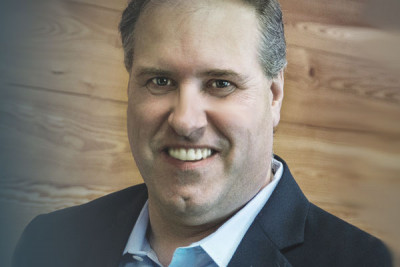
Brian Straight is the Editor in Chief of Supply Chain Management Review. He has covered trucking, logistics and the broader supply chain for more than 15 years. He lives in Connecticut with his wife and two children. He can be reached at [email protected], @TruckingTalk, on LinkedIn, or by phone at 774-440-3870.
Follow SCMR on social media.
@SupplyChainManagementReview on Facebook
@SCMR on Twitter
SCMR on Linkedin
Subscribe

Supply Chain Management Review delivers the best industry content.

Editors’ Picks



